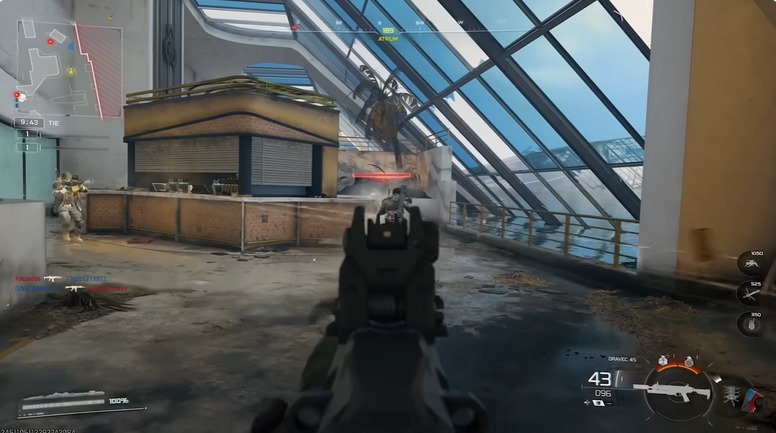
The Call of Duty franchise just threw the movement meta into overdrive. Black Ops 7’s Omnimovement system isn’t just another incremental update—it’s a complete reimagining of how you navigate combat spaces.
And if you’ve been getting shredded by players sliding backward while maintaining perfect aim, you’re about to understand why.
What Makes Black Ops 7 Omnimovement Different
Previous Call of Duty titles gave you forward movement options. Black Ops 7 gives you everything, everywhere, all at once.
The core difference? True 360-degree freedom. Sprint in any direction—forward, sideways, backward—without breaking tactical sprint. Dive toward cover while facing threats. Drop to prone while maintaining sight lines.
Wall jumps add vertical unpredictability. Chain up to three consecutive jumps off surfaces, each progressively lower, to fake out pursuers or reach unexpected angles. The system rewards creativity over muscle memory.
Black Ops 6 introduced the foundation. Black Ops 7 perfected it by removing directional restrictions that felt arbitrary. No backward wall jumps exist (yet), but the freedom to jump based on camera direction rather than movement direction changes engagement geometry entirely.
Breaking Down the Core Mechanics
Directional Sprint Mastery
Your sprint isn’t limited to “W key forward” anymore. Enable sideways and backward sprint assist in settings, and you’ll glide in any direction at full tactical sprint speed.
The game auto-activates tactical sprint with zero delay when you enable the right settings. No more momentum loss between movement changes.
Slide, Dive, and Prone Integration
Hold your slide button during omnidirectional sprint to execute prone drops. The difference between “slide-only” and “hybrid” behavior matters here—slide-only gives you consistent prone access, while hybrid can occasionally trigger dives instead.
Backward prone drops become defensive tools. When someone’s pushing, dropping backward while maintaining aim creates micro-advantages that separate good players from great ones.
Wall Jump Mechanics That Matter
Approach walls at angles, not head-on. Side approaches generate smoother momentum preservation. The three-jump chain exists, but each jump drains height and speed—use them to escape, not to showboat.
Wall jumps don’t work backward. Your camera facing determines jump direction, independent of movement vector. This lets you jump sideways while sprinting backward, creating unpredictable escape routes.
Slide Cancel Precision
Sprint, slide, jump. Or sprint, slide, ADS. Both reset your stance for reload cancels or rapid repositioning.
The technique works omnidirectionally now. Slide canceling while moving backward feels wrong initially—your brain expects forward momentum. Trust the inputs. The system rewards precision, not intuition.
Jump Slide for Sightline Manipulation
Jump first, slide mid-air. You’ll skim over common sightlines while maintaining most movement speed. Use this crossing dangerous lanes or when you need to relocate without exposing yourself to pre-aimed positions.
Essential Settings Configuration
Console Players
Sprint Assist: Enable for all directions. You’ll never accidentally walk when you meant to sprint.
Slide/Dive Behavior: Set to slide-only or hybrid based on preference. Slide-only gives consistent prone access; hybrid adds dive variety but requires adjustment.
Tactical Sprint: Auto-activate with zero delay. Manual activation introduces inconsistency.
Mantle Assist and Crouch Assist: Most competitive players disable these. You want intentional control, not automatic actions during fights.
PC Considerations
Keybind philosophy mirrors console: minimize input conflicts, enable zero-delay tactical sprint, and ensure slide/prone share the same input for seamless transitions.
Frame rate matters more with Omnimovement than previous titles. The system’s fluidity depends on consistent frame pacing. If you’re dropping below 100 FPS during chaotic fights, consider optimizations. For those seeking pixel-perfect control during complex movement chains, advanced solutions from Battlelog.co can ensure your inputs translate flawlessly even during the most demanding sequences.
Techniques That Separate Skill Tiers
Beginner Foundation
Start in private matches. Chain movements without combat pressure. Practice:
– Forward sprint → backward slide → prone
– Side sprint → wall jump → forward slide
– Any direction sprint → jump slide over obstacle
The training mode exists for a reason. Use it until these chains feel natural, not conscious.
Intermediate Progression
Introduce combat scenarios. The fundamental sequence: slide, ADS, jump.
This single pattern underpins most advanced plays. You’re creating erratic movement while maintaining aim potential. Do it hundreds of times. Muscle memory develops through volume, not understanding.
Backward prone during defensive plays saves lives. When you’re weak and someone’s pushing, dropping backward puts you prone while facing the threat—lower profile, maintained sightlines, unexpected timing.
Advanced Applications
Wall jump redirects confuse tracking. Jump off a wall in one direction, immediately sprint the opposite way. Opponents tracking your initial trajectory get lost.
Slide canceling into instant re-slide creates stutter-step movement that breaks aim assist and throws off manual tracking. You’re exploiting the brief stance reset window.
Combine techniques contextually. Wall jump to escape, land into backward slide, transition to side sprint, jump slide across the next sightline. Unpredictable patterns win fights against equal aim.
The Learning Curve Reality
Black Ops 7’s movement system rewards practice disproportionately. Early matches feel chaotic—you’re getting killed from angles that shouldn’t exist, by players who seem to break physics.
They’re not breaking anything. They’re exploiting the full system while you’re using 30% of available options.
The steep curve intimidates. Push through. Community sentiment remains overwhelmingly positive among players who invest time. Those who don’t blame the game for their limitations.
Motion sickness hasn’t emerged as a widespread complaint, though the increased visual complexity might affect susceptible players. Start with shorter sessions if you notice discomfort.
Competitive Meta Implications
Early competitive adoption shows aggressive Omnimovement defines the meta. Passive players get run over by opponents who chain mechanics into relentless pressure.
The system compresses skill gaps in some ways—high-skill movement is more accessible—while expanding them in others. Once everyone can move well, the ceiling raises through combination creativity and split-second decision-making.
No official pro statistics exist yet, but community analysis suggests top players average 40-60% more directional sprint changes per minute than casual players. They’re constantly repositioning, never presenting static targets.
For players seeking every possible advantage in ranked environments, optimization extends beyond practice. Black Ops 7 hacks from Battlelog.co offer precision enhancements that complement advanced movement, ensuring your mechanical execution matches your strategic intent during critical moments.
Performance and Hardware Factors
The system’s demands extend beyond controller inputs. Higher frame rates provide smoother transitions between movement states. Input lag becomes more noticeable when you’re chaining rapid direction changes.
Console players on performance modes report better responsiveness than quality modes. The fidelity sacrifice matters less than consistent frame pacing during complex movement sequences.
Monitor response time contributes too. When you’re sliding backward, wall jumping, and snapping back to ADS within one second, every millisecond of display lag compounds.
Common Mistakes to Avoid
Don’t sprint head-on at walls expecting smooth jumps. Angle your approaches.
Don’t chain all three wall jumps just because you can. Each jump loses momentum—use them purposefully, not decoratively.
Don’t ignore settings optimization. Default configurations weren’t designed for competitive play.
Don’t expect instant mastery. The system requires dedicated practice time that feels unproductive initially. Trust the process.
Moving Forward
Black Ops 7 Omnimovement represents where Call of Duty movement has been heading since Advanced Warfare introduced boost jumps. The difference? This system feels grounded despite its complexity. You’re not flying—you’re maximizing real-world momentum possibilities.
The learning curve exists. So does the payoff. Players who master omnidirectional combat options will dominate those who don’t, regardless of raw aim skill.
Time to hit private matches and put in work. Because while everyone has access to the same mechanics, very few will actually master them.